Deciding whether to plant
What matters is whether there's a seed source and whether the ground will take seed. Look at what survived. Living trees of the species you want, within seeding distance and upwind, are the cheapest reforestation there is. Then look at the ground itself. Exposed mineral soil takes seed. Heavy grass, thick brush, or an unbroken mat of needles mostly doesn't.
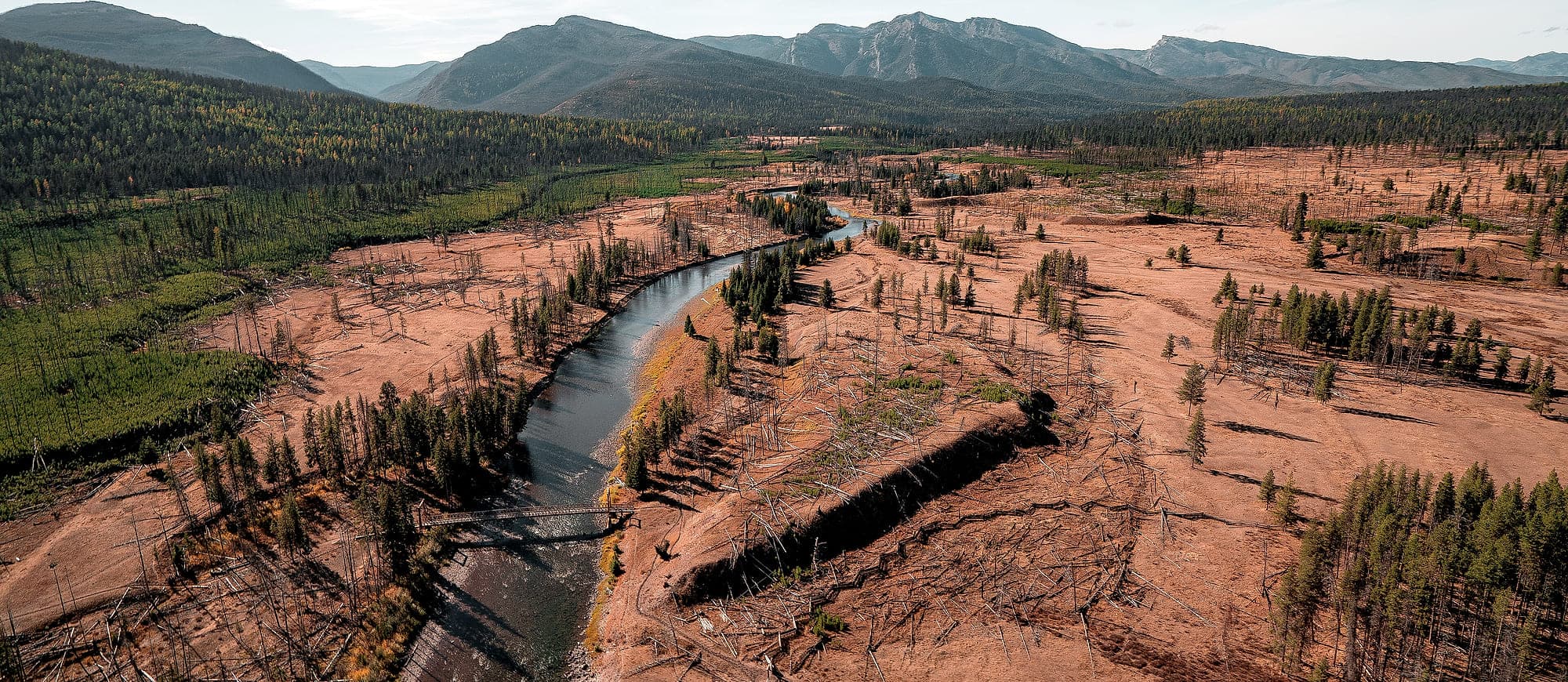
Severity is the other half. A patchy burn with plenty of surviving trees usually needs nothing but time. A big, uniformly severe burn where every seed tree died across a long distance won't come back to conifer forest in any human timeframe without planting, and the window before grass and shrubs take the site is a few years at most.
What to plant, and where it goes
Species selection follows the site, not your preference. Elevation, aspect, soil depth and moisture decide what actually survives. Planting whatever was there before isn't automatically right, especially where the last stand was itself a product of fire exclusion, or where the site is drying out.
Across much of western Montana the durable choices on drier ground are ponderosa pine and western larch. Both are fire-resistant once they mature, both handle drought better than the firs, and larch grows fast and turns the hillsides gold every October. Planting a mix instead of one species spreads your risk against any single insect, disease, or bad year.
What decides whether seedlings live
Seedlings die for a short list of predictable reasons, and nearly all of them get handled in the planning.
- Ordering too late. Nursery stock is grown to order, and good seedlings from the right seed zone are often spoken for a year or more ahead.
- Site prep. Competing grass and brush kill more seedlings than anything else, and a site that needs treatment before planting won't be rescued by planting harder.
- Handling. Seedlings that get warm or dry between the nursery and the ground are already compromised when they go in.
- Planting quality. Depth, root orientation, and firming the soil are the difference between seventy percent survival and thirty on the same site.
- Browse. Where elk and deer are concentrated, unprotected seedlings of palatable species can get grazed to nothing.
Habitat work, done alongside
Restoration is a natural moment to improve habitat, because most of what helps wildlife costs very little when it's planned into work that's happening anyway. Leaving snags and downed wood instead of tidying them up. Protecting aspen and other hardwoods from conifer encroachment. Keeping openings and edges instead of planting everything uniformly. Treating noxious weeds before they get established on the ground disturbance you just created.
Cost-share programs often fund habitat and restoration work outright, and reforestation carries its own federal tax treatment through a deduction and amortization of establishment costs. That's a real benefit a lot of landowners never claim.
Questions people ask
Individual conifers that got badly scorched usually can't, since most western conifers don't resprout, so a tree killed by fire is dead. The forest often comes back on its own though, from surviving trees, from seed already in the ground, and from species like aspen that resprout hard from their roots after fire. Whether that happens on your ground depends on how much survived nearby and how severe the burn was.
Generally one to three years. Planting the first spring after a fire is often too soon. The site can still be unstable, hazard trees make the work dangerous, and it isn't yet clear what's coming back on its own. Waiting past about three years is the more common and more expensive mistake, because grass and shrubs take the site and then have to be cleared before planting will work. A survey in the first year or two tells you which parts need planting and which don't.
Montana doesn't impose the mandatory reforestation requirements some states do on private land, so there's generally no legal obligation. That's the law, not good practice. A site harvested and left with no plan for what comes next frequently returns as brush, or as a species you didn't want. If your ground is under a conservation easement, a certification program, or a cost-share agreement, those often do carry reforestation obligations.
Three parts: the seedlings, any site prep needed to give them a chance, and the labor of planting. Seedlings are the smallest of the three on most jobs. Site prep runs from nothing to a substantial expense depending on what's competing. Planting labor depends on terrain, density, and how far crews have to walk. Federal and state cost-share can cover a meaningful share where the work qualifies.
The state nursery supplies conifer seedlings to Montana landowners, and there are private nurseries serving the region too. The detail that matters is seed zone and elevation band. Seedlings grown from seed collected in a climate unlike yours perform poorly no matter how well they're planted. Since stock is grown to order, planning a year ahead is normal, not cautious.
Yes, and it gets missed constantly. Federal rules let you deduct a portion of qualifying reforestation costs in the year you incur them and amortize the rest over a period of years. It covers site prep, seedlings and planting labor. What makes it claimable is keeping the receipts and acreage records properly from the start, so raise it with your CPA before the work, not after.