
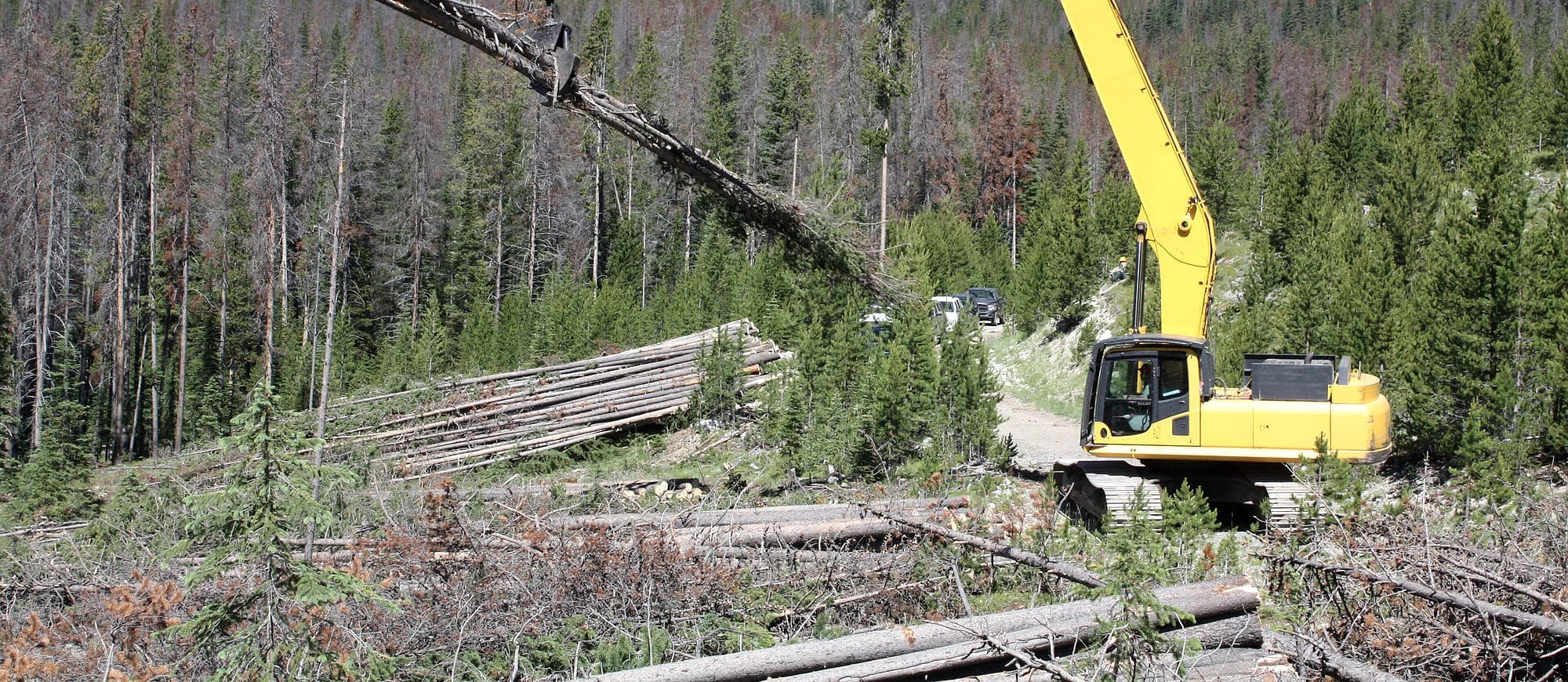
How a sale actually runs
The order stays the same even when the details don't. First the timber gets measured, so everybody knows what's being sold. Then the harvest units get laid out on the ground and flagged, and either the trees coming out or the trees staying get marked with paint. Montana's streamside management zone rules and the required forest practices notification get handled here.
Then it goes to market, usually as a written prospectus circulated to logging contractors and mills with sealed bids due by a date. The contract covers price and payment terms, operating season, road use and maintenance, slash treatment, erosion control, damage provisions, and what happens if either side doesn't perform. Work runs under inspection, and the sale closes out once the ground has been left the way you agreed.
Access and roads
Access kills more sales than most landowners expect. Can a log truck get to the landing? Will the existing roads carry loaded traffic in the season you want to operate? Does a stream crossing need work? Do you actually hold a legal right of way across your neighbor's ground? Those answers decide whether a sale is worth running at all.
Where new road is needed, layout matters permanently. Grade, drainage and crossing design are the difference between something you can drive for thirty years and something that erodes into a creek. You can usually get a well-designed sale to pay for road work you'd otherwise fund yourself, but only if you plan it before the sale sells. Arguing about it afterward doesn't work.
How landowners get taken
Rarely by outright fraud. Much more often by a knock at the door with a lump-sum offer and a signature line, from somebody who has walked the property and knows what's on it while the owner doesn't. The offer isn't necessarily unfair. It just has no competition against it and no measurement behind it.
The other losses are quieter. A contract with nothing about residual stand damage, so the trees you kept come out scarred. No operating season restriction, so your ground gets rutted in spring mud. No bond or retention, so you have nothing to hold back when the contractor leaves a mess. Payment terms that put all the risk on you. None of that shows up in the price. All of it shows up later.
What representation covers
Marking and layout, the prospectus and competitive bid, the contract, picking the contractor, regulatory notification, inspection while the work runs, and closeout. One person accountable for the whole sequence, with no financial interest in who buys the wood.
There's a fair question about whether that's worth it on a small sale, and the honest answer is that sometimes it isn't. Where volume is modest, a lighter scope works better: measurement and a contract review, without full administration.
Questions people ask
Roughly: find out what you have, decide what should come out and why, lay the sale out and mark it, put it out for competitive bid, sign a contract that protects the land as well as the price, and have somebody inspecting while the work happens. You can also just take the first offer that shows up, and some landowners do fine that way. The sequence above is what separates a sale you're happy with in ten years from one you aren't.
There's no legal minimum and no rule that small ground gets ignored. What decides it is whether enough merchantable volume comes out to interest a logging contractor, because moving equipment on and off a property costs about the same whether the job is small or large. So it's a volume question rather than an acreage one, which is why two properties of the same size can come out opposite ways. Stocking, species, average diameter, terrain and haul distance all move it. The way to find out is to have the standing timber measured before you go looking for a buyer, not after somebody has already made you an offer.
You can't, without an independent measure of what's standing there and some idea of current delivered log prices for your species at the mills within haul distance. Those prices move quarterly. An offer that was generous eighteen months ago might be poor today, or the other way around. The comparison only means something against a measurement you commissioned yourself.
Lump sum means a fixed price for the marked timber no matter what actually scales out. You get certainty and the buyer carries the volume risk. Per unit means you're paid on measured volume as it goes out, which captures the upside if the stand cruises better than expected and leaves you exposed if it doesn't. Lump sum also tends to have cleaner capital gains treatment. Which one fits depends on how confident you are in the measurement and how much variability you can stomach.
Montana doesn't require a harvest permit the way heavier-regulation states do, which surprises people who have owned timber ground elsewhere. You do have obligations. A forest practices notification is required before commercial harvest, and the Streamside Management Zone law restricts what you can do near streams, lakes and wetlands. Local zoning, subdivision covenants, or a conservation easement can add conditions of their own, and those are worth checking before you commit.
Almost always, but how it's taxed matters a lot. Timber held long enough and sold the right way generally gets capital gains treatment instead of ordinary income, and you can deduct your basis in the timber. On inherited property that basis is often stepped up to the value at date of death and can be very large. Getting basis established correctly, ideally before the sale, is where the money is. Take that to a CPA who has handled timber, and do it early.
Plan on months, not weeks. Measurement and layout take the first stretch, bidding and contracting a few weeks more, and the harvest itself gets scheduled around the contractor's other work and around ground conditions. Most western Montana ground runs best on dry summer ground or frozen winter ground, not spring mud. First walk to closeout, six months to a year is normal.