What a measurement actually involves
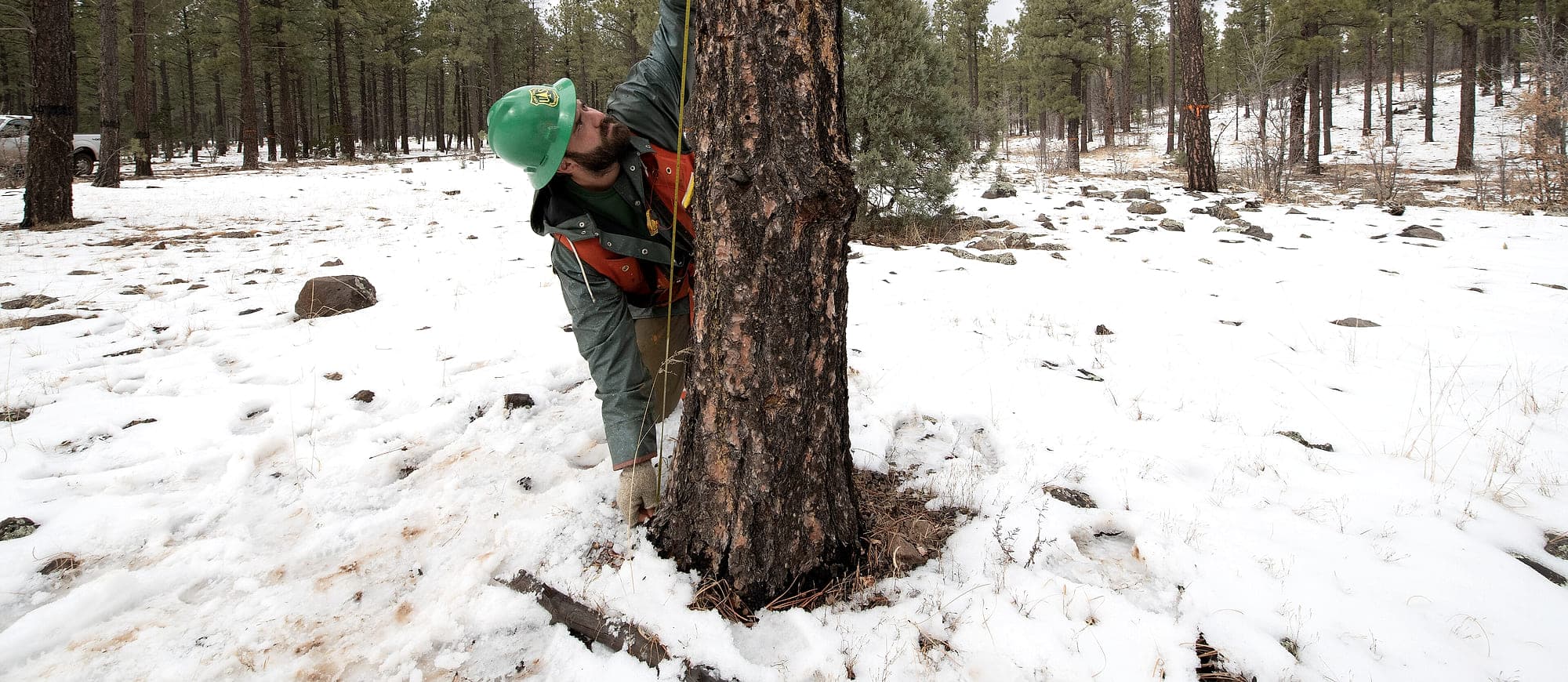
Instead of counting every tree, I run a designed sample across the property. Plots go in on a grid so the sample isn't biased, and each one records species, diameter, merchantable height, and defect. That gets scaled up to the whole ownership and reported as volume by species and product class.
You end up with a written report you own: how much of what you've got, where the value sits, and what it's plausibly worth delivered to the mills that would actually bid. It's the document you hand a buyer, and having it changes the conversation completely. You're no longer taking somebody's word for what's on your own land.
Why the free version isn't the same thing
Every mill in western Montana will send a forester out to look at your timber for nothing. They're good at their jobs and they aren't trying to cheat you. But they're paid to secure logs at a price that works for their employer, and the estimate they give you feeds an offer they intend to make.
That gap is the whole reason this service exists. An independent measurement has nothing riding on whether you sell, who buys, or when. What you're buying is a number you can hold an offer up against, worked out by somebody who gets paid the same whichever way you decide.
When you need a number and nobody's cutting anything
Timber value comes up plenty of times when there's no sale in sight. Settling an estate needs a defensible value as of the date of death, which also sets the basis that determines tax on any future sale. Buying forested property needs a number before closing, not after. Casualty losses from fire or storm need a documented before and after. Divorces, partnership splits, and arguments with a neighbor over a boundary harvest all need a figure that holds up.
These are low-volume, high-stakes jobs, and it's worth being clear on scope. A timber cruise and valuation isn't a certified real property appraisal. It values the standing timber, not the land, and it's the right instrument for most of what's above. Where a full appraisal really is required, better to know that before you commission the wrong thing.
Questions people ask
Anybody who answers that without walking your ground is guessing. Across small private ownerships in western Montana the range is very wide, driven mostly by species mix, average diameter, volume per acre, and haul distance to a mill that wants what you've got. Ponderosa and Douglas-fir sawlogs on gentle ground near a mill sit at one end. Small lodgepole on a steep pitch a long way from anywhere can be worth so little that taking it out costs more than the wood brings.
Worth noting you're selling the standing timber, not the acre. You keep the land. What you get paid is stumpage, which is what's left after logging and hauling come out of the delivered log price. That's why haul distance and terrain matter so much. The same tree is worth considerably more beside a paved road twenty miles from a mill than at the end of eight miles of rough access.
It's priced per acre, and the rate drops as the property gets bigger, because setup and reporting costs spread further. What pushes it up is steep or brushy ground that slows you down, stands with a lot of species and sizes mixed together, a need for tighter statistical precision, and poor access. A small ownership needing a defensible number for an estate costs more per acre than a big one being scoped for a sale.
Not legally, and plenty of landowners sell without one. Whether you should comes down to how much volume is in play. On a sale worth a few thousand dollars a full cruise may not earn back its cost, and a walkthrough with a written opinion is the right-sized answer. On anything substantial, going to market without knowing what you own means negotiating against somebody who does.
Field work on a typical small to mid-sized ownership runs one to several days depending on acreage, terrain, and how tight the precision needs to be, with the report a couple of weeks behind. Snow closes higher ground, so scheduling in western Montana usually means late spring through fall for anything above the valley floor.
Yes, and it comes up regularly. A lot of small ownerships in western Montana don't carry enough merchantable volume to interest a logging contractor. Others have real value that's a decade out, where cutting now means leaving money standing. Hearing that costs me one job and is the reason people come back.